Boxabl Site Prep & Utilities: The Thousand Oaks Owner’s Guide
Boxabl site prep and utility hookups in Thousand Oaks typically run $18,000 to $45,000 installed, depending on whether you’re starting from raw dirt or tying into existing sewer, water, and electrical lines. Seedling ADU Thousand Oaks stocks the utility connection components and site prep materials needed to get a Boxabl Casita locked in and powered up, usually within two to four weeks once permits clear. Most owners discover something’s off when the city inspector flags a trench depth, the plumbing stubs don’t line up with the Boxabl’s connection points, or the pad settles after the first winter rain.
We’re an independent contractor, not affiliated with Boxabl, which means we spec the site work to your lot and your unit rather than following a one-size-fits-all dealer checklist. That matters in Thousand Oaks, where soil conditions shift from clay-heavy flats to rocky hillside cuts within the same neighborhood.
Which Boxabl Models This Applies To
The site prep and utility work we handle applies to the Boxabl Casita line, including the 20×20 model and the newer 20×30 configuration. Boxabl units are delivered as a folding module that drops onto a prepared foundation, so the site work has to match the connection points exactly: the electrical service entry, water supply stub, sewer drop, and any gas line if the unit is ordered with gas appliances.
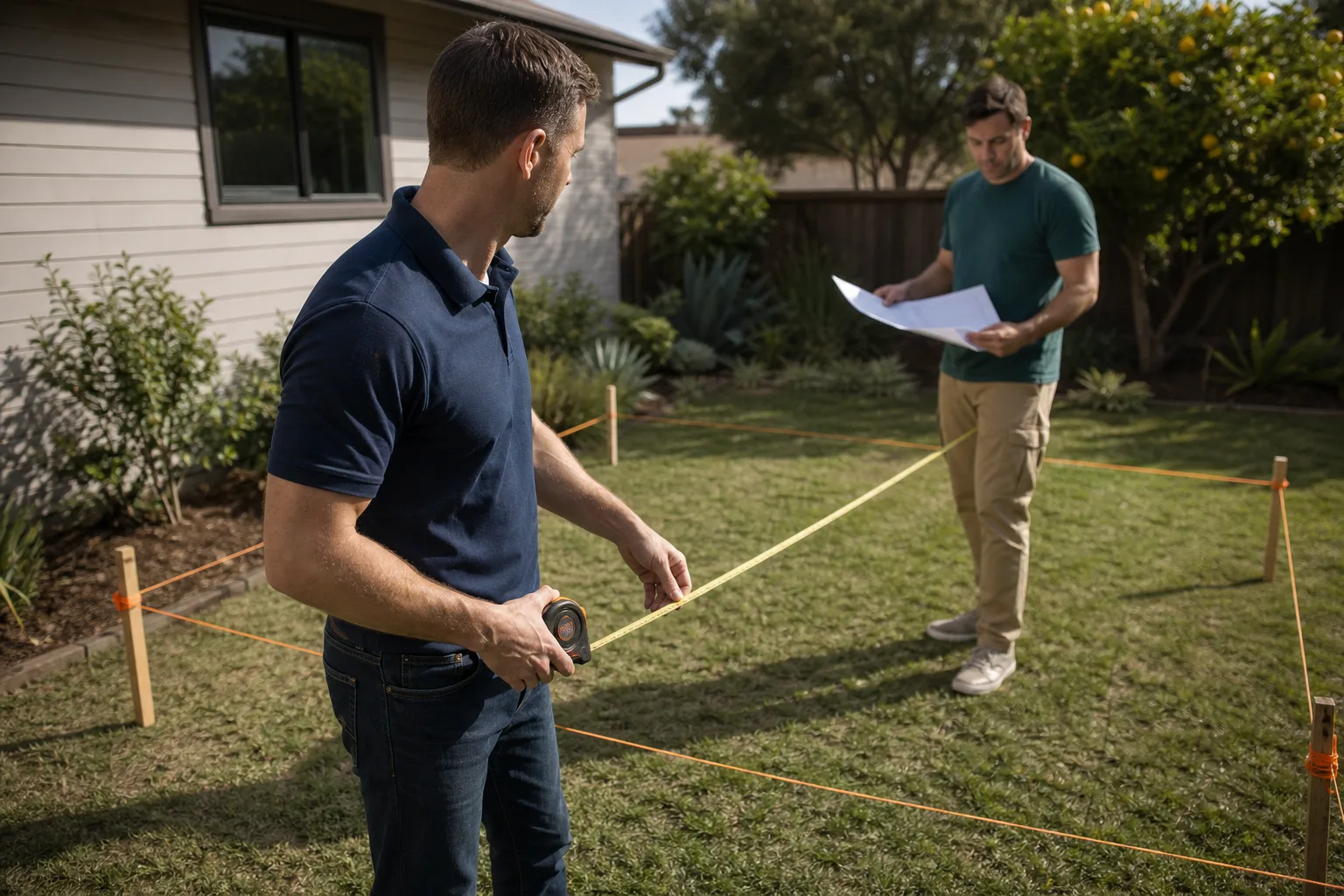
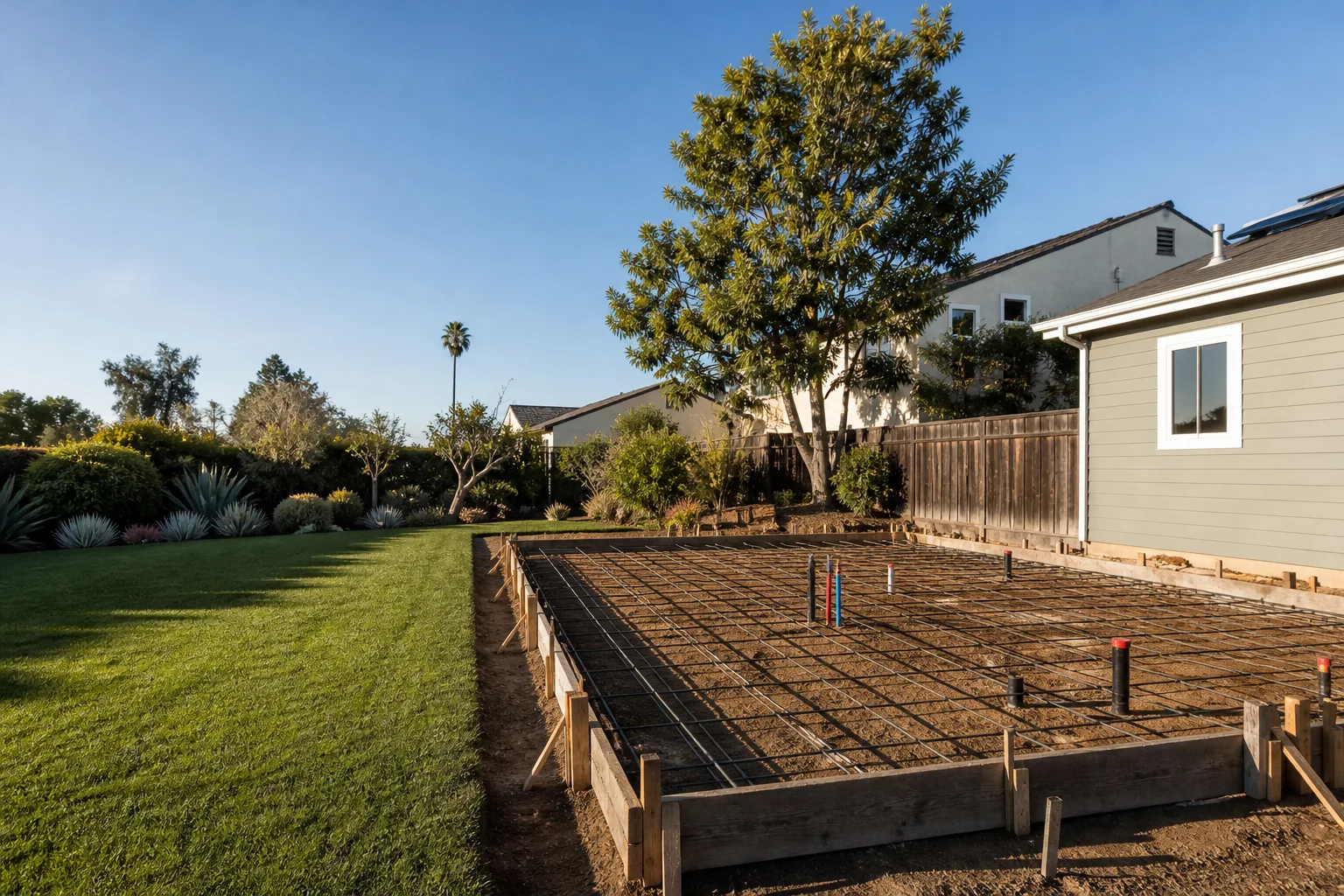
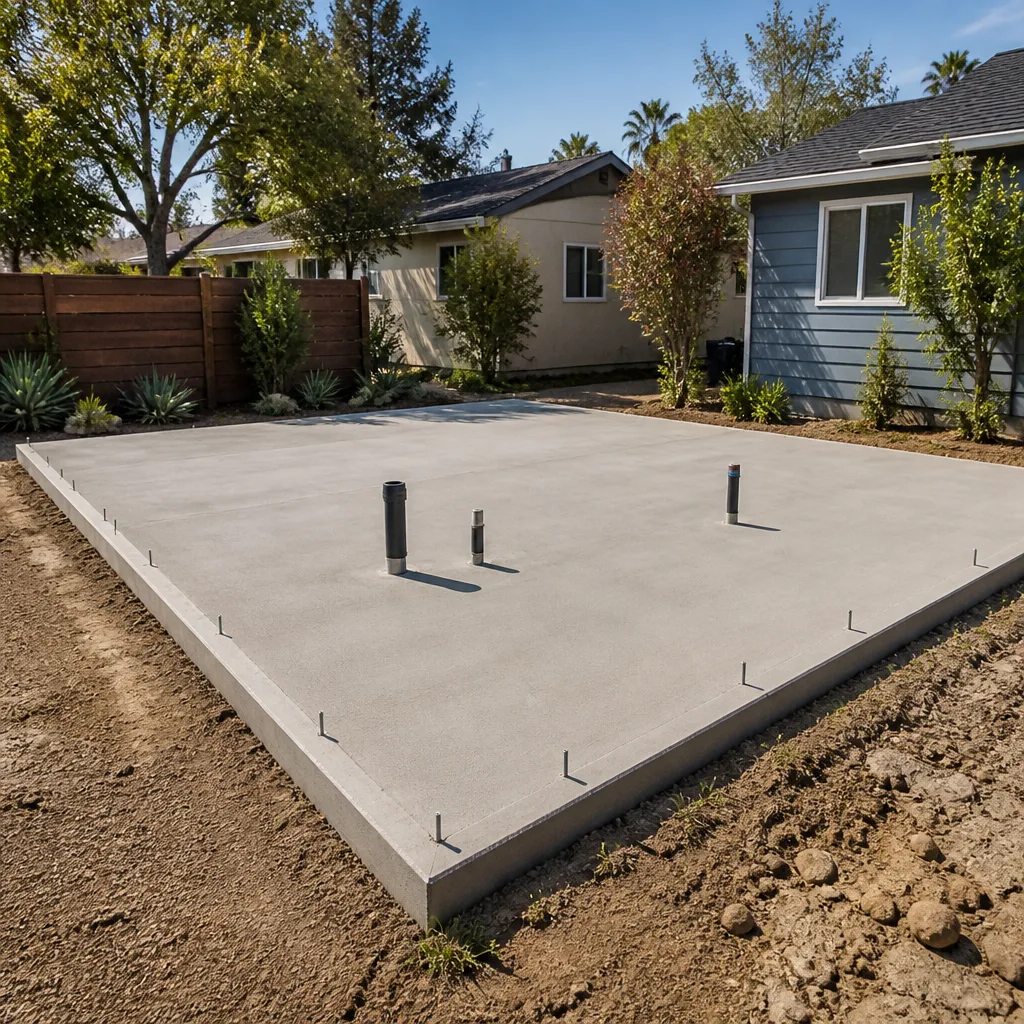
Here’s the compatibility gotcha we see in Thousand Oaks: the Boxabl’s utility penetrations are factory-set, but no two lots share the same slope, set-back, or utility access point. A slab that’s off by four inches means cutting and patching concrete or running an exposed chase, which is exactly the kind of surprise a written pre-bid site survey should catch. When we do a Boxabl site prep, we measure from the property line to the unit’s actual connection points, not the curb appeal. For the pad itself, we’re looking at concrete thickness, rebar schedule, and drainage, because a Casita weighs roughly 12,000 pounds loaded and sits on its own foundation, so any differential settling shows up as door misalignment within a year. We use OEM-spec connection kits where available and quality aftermarket components for the rest, but we always verify thread size, amperage rating, and pipe schedule against the unit’s own manual before anything gets buried.
Signs Your Boxabl Site Prep & Utilities Is Failing
- Doors or windows start dragging. If the pad has settled or was poured without proper compaction, the Boxabl frame shifts just enough that doors stick or don’t latch. In Thousand Oaks, we see this most on hillside lots after heavy rain, because water finds the fill dirt and moves it.
- Low water pressure or odd taste. This points to an undersized or improperly bedded supply line, or a stub that’s been kinked or crushed. If you’re on city water, the pressure should match the rest of the house; if it’s noticeably weaker, the line between the meter and the Boxabl is usually the culprit.
- Breakers trip when you run a heater and a kettle at once. A Boxabl needs a dedicated, properly sized subpanel and feeder wire. If the feeder is undersized or the connections are loose, you’ll see intermittent trips that get worse in winter when loads pile up.
- Sewer smell inside the unit. If the waste line wasn’t sloped correctly or the P-trap wasn’t vented to code, sewer gas can back into the unit. This is both a comfort and a health issue, and it’s not something to mask with air freshener.
- Water pooling near the footprint after rain. If the pad grading or perimeter drainage wasn’t done right, water will sit against the unit’s base and find a way in. Boxabl units are well sealed, but standing water against any foundation, even a modular one, shortens its life.
Replacement Cost & What’s Included
For Thousand Oaks homeowners fixing failed or incomplete site prep on an existing Boxabl, here’s what the numbers look like once we’ve walked the site:
- Pad repair or slab-leveling: $2,500 to $7,000 depending on how much has to be removed and re-poured.
- Electrical subpanel and feeder replacement: $1,800 to $4,200 if the existing panel is unsafe or undersized.
- Plumbing stubs and trench work: $1,500 to $5,000 for correcting slope, replacing crushed pipe, or adding a clean-out.
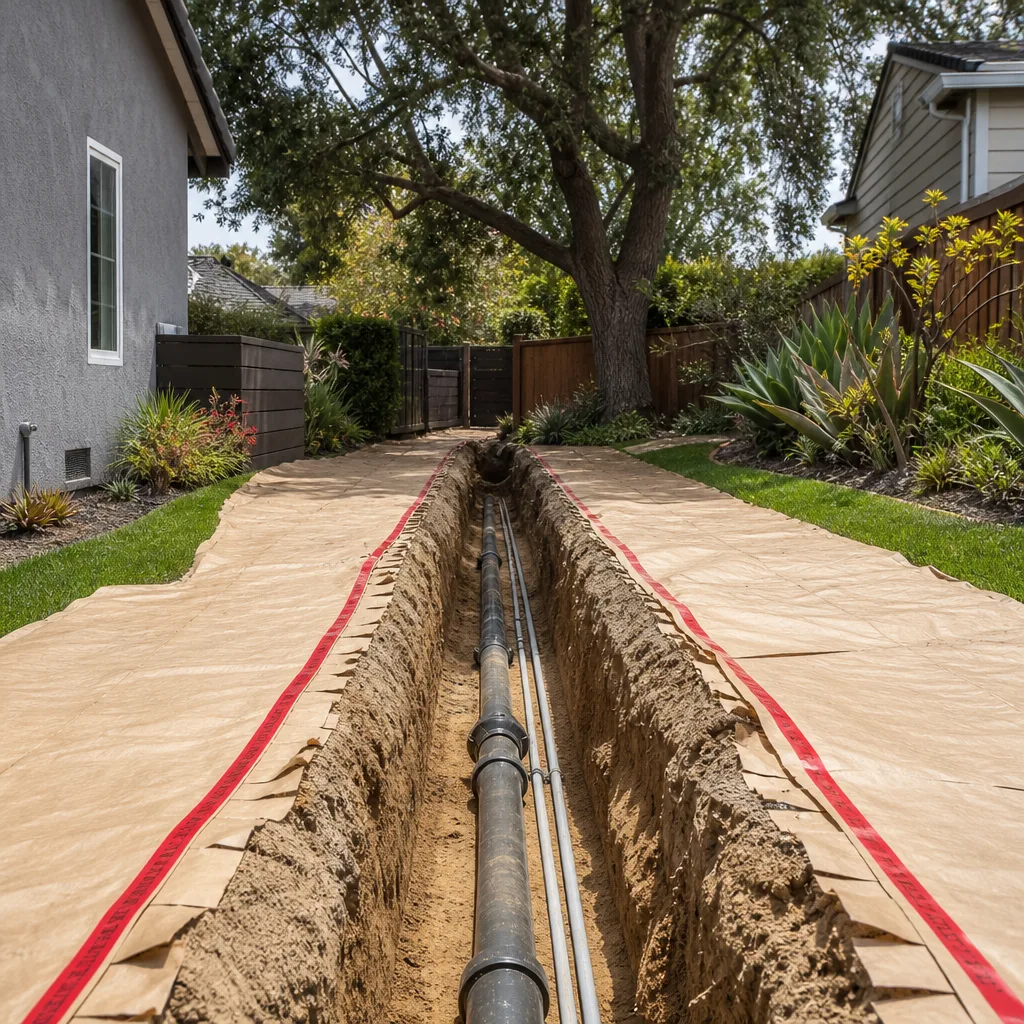
- Full utility trench with conduit and water/sewer: $6,000 to $14,000 when starting fresh from the street or house connection.
- Pad and perimeter drainage correction: $3,000 to $9,000 for hillside lots or where water is running toward the unit.
Every line item is written down before we start, so the number you see is the number we honor. If we uncover something unexpected during the dig, Ben Ortega walks the site with you before anything changes, because surprises don’t belong in the bill. The work is covered by our 365-Day Done Right Promise: if it’s not done right, we make it right.
DIY or Call Us?
There are a few things an owner can safely check before calling: look for visible gaps or cracks at the pad edges, sniff around the unit for sewer smells, and check whether any breakers feel warm after a load test. That’s about it. Digging a utility trench without a survey, hot-tying a new electrical feeder, or setting a form over uncompacted fill is how people get hurt or end up with a condemned inspection. Buried gas and live electrical are not “watch a video” territory, and Thousand Oaks code enforcement is strict about unpermitted utility work. If the trench is open or the panel is hot, that’s the moment to call (805) 309-3462 before the problem gets more expensive.
FAQs
A properly prepared pad and utility run on a stable Thousand Oaks lot should last 30 to 50 years, but the weak points are drainage and soil movement. If water is managed and the fill is compacted right, the work outlives most homeowners’ time in the house. Call (805) 309-3462 and we’ll tell you honestly whether your existing prep is worth saving.
Most of the time it can be repaired. Slab leveling, re-sloping a sewer line, or adding a clean-out is common work for us. A full redo only makes sense if the original pad was poured over debris or the utility runs were never permitted in the first place. We’ll tell you which one you have after a site visit, not before.
Depending on permit turnaround and excavation, plan on two to four weeks from first dig to final inspection. Weather slows concrete pours, and the City of Thousand Oaks inspection calendar can add a few days, but the actual on-site work is typically under two weeks.
We keep common Boxabl-compatible connection kits, subpanels, and plumbing fixtures on our trucks, and we order model-specific components direct the same day we confirm your unit’s specs. You won’t be waiting on a homeowner-ordered part that arrives wrong. We also work with Abodu, Cover, and Dvele units, so we keep crossover parts in the van, too.
If your Boxabl is sitting on a pad that’s moving or the power flickers every time the microwave runs, call (805) 309-3462. We’ll walk the site, give you a written price, and leave you with a plan you can hold us to.
Written by Ben Ortega, Owner, Seedling ADU Thousand Oaks at Seedling ADU Thousand Oaks, serving Thousand Oaks and nearby areas.