Permit Application in Thousand Oaks, CA
Permit application in Thousand Oaks is the paperwork stage of your ADU build where your plans get submitted to the City of Thousand Oaks Community Development Department for formal approval before any construction begins. Most homeowners don’t realize that a permit application involves far more than filling out a form: it requires architectural drawings, site plans, structural calculations, Title 24 energy reports, and often a planning review because Thousand Oaks sits within the coastal zone boundary that triggers additional scrutiny under the California Coastal Act. We handle every page of it, track it through every department, and resolve every correction comment until the permit is issued and the job card is posted on your fence.
Seedling ADU Thousand Oaks manages permit applications for accessory dwelling units, garage conversions, and home additions across Thousand Oaks, Newbury Park, Westlake Village, and the Conejo Valley. Ben Ortega and our team have filed enough permits with the City’s Building and Safety Division to know which counter technician reviews which plan set, how long the average plan check takes in each quarter, and what specific detail tends to get flagged on the first review. If you’re still deciding whether to build, start with our ADU Design & Permitting in Thousand Oaks page, which walks through the full process from first sketch to final inspection. If you already have plans and just need someone to get them through the City, call us at (805) 309-3462 and we’ll tell you exactly what’s missing before you spend another dollar.

When You Need Permit Application
You need permit application help in Thousand Oaks in any of these situations. Each one is common, and each one has a specific fix that we’ve handled before.
- You have plans but no permit. Maybe you bought a property with ADU plans already drawn, or you hired a designer who delivered drawings but told you “the permitting is on you.” The City won’t accept plans that aren’t formatted to their current submittal standards, and resubmitting after rejections costs weeks.
- Your first submission came back with corrections. The City of Thousand Oaks generally issues a correction letter after the first plan check. Common comments involve fire sprinkler calculations, lot coverage percentages in the R-1 zones around Wildwood and Lynn Ranch, or missing drainage details for hillside lots north of the 101.
- You’re converting a garage and the property has an HOA. Several HOAs in Thousand Oaks, including around Westlake and Lang Ranch, require architectural committee sign-off before the City will even accept your application. We prepare the HOA package and the City package in the same pass so nothing gets bounced.
- Your property has a septic system or is on a private street. Parts of Thousand Oaks, especially the larger lots toward Hidden Valley and Lake Sherwood, operate on septic. The City requires a clearance from the Ventura County Environmental Health Division before a permit for an attached or detached ADU is issued. Private street agreements can add a recorded easement requirement too.
- You’re building a prefab ADU and the manufacturer’s drawings aren’t City-ready. Companies like Abodu and Cover provide excellent factory drawings, but the City of Thousand Oaks still requires local site adaptation details, foundation calculations for your specific soil, and a site plan with your actual setbacks. We bridge that gap without redesigning the whole unit.
- You need a permit but you’re not sure which kind. A junior ADU inside your existing home has a different application path than a detached new build. A garage conversion with no plumbing is treated differently than one with a bathroom. Filing for the wrong permit type in Thousand Oaks means fees paid twice and months lost.
Our Permit Application Process
Here’s what happens when Seedling ADU Thousand Oaks takes on your permit application. We follow the same sequence every time because it prevents the two things that derail most ADU permits in Ventura County: incomplete submittals and slow correction responses.
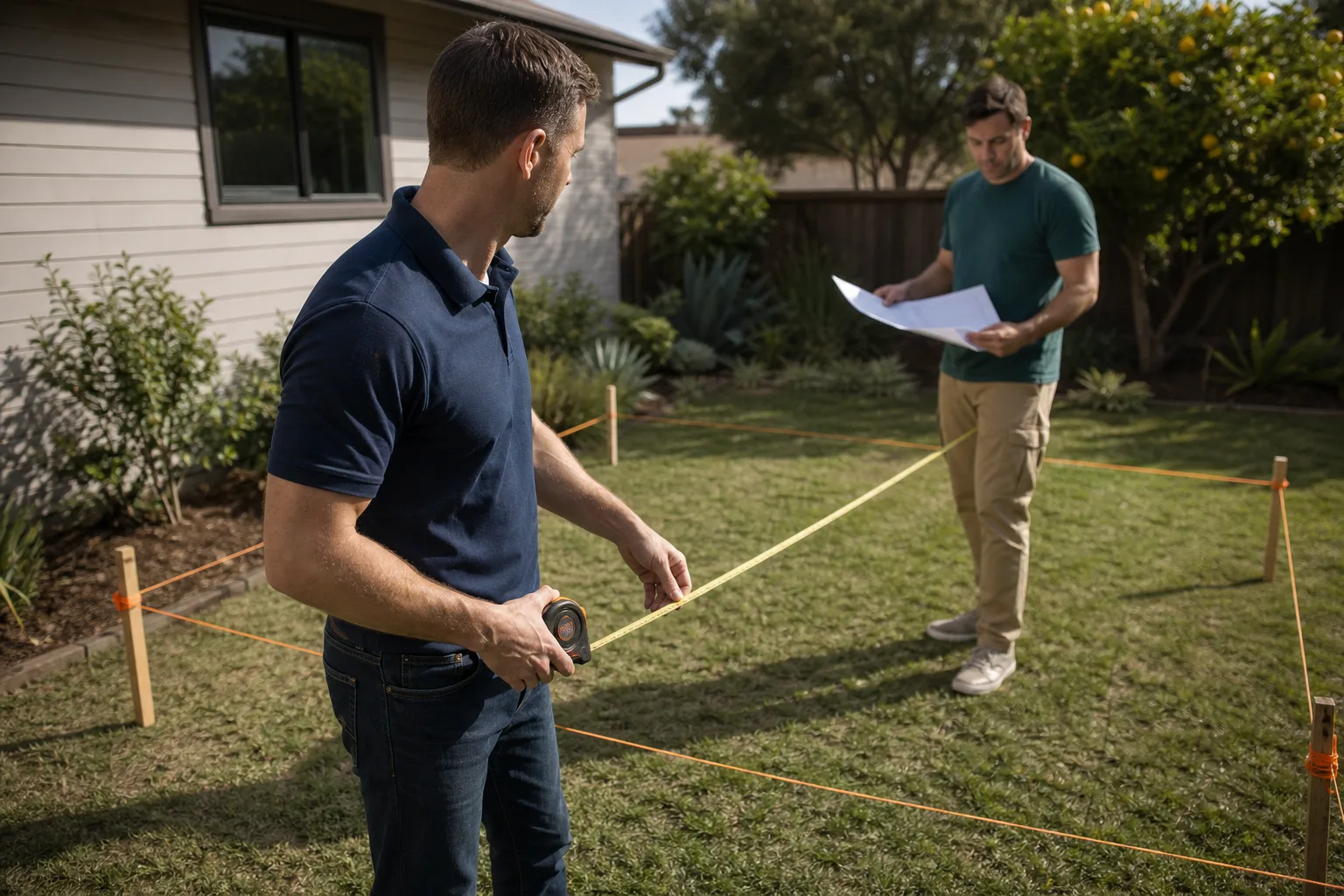
- Document review and site verification. We start by going through every page you already have. Then we schedule a site visit to confirm the property’s actual conditions: lot dimensions, easement locations, existing utility connections, tree locations that Thousand Oaks protects under its oak tree ordinance, and the current floor plan if we’re converting space inside your home.
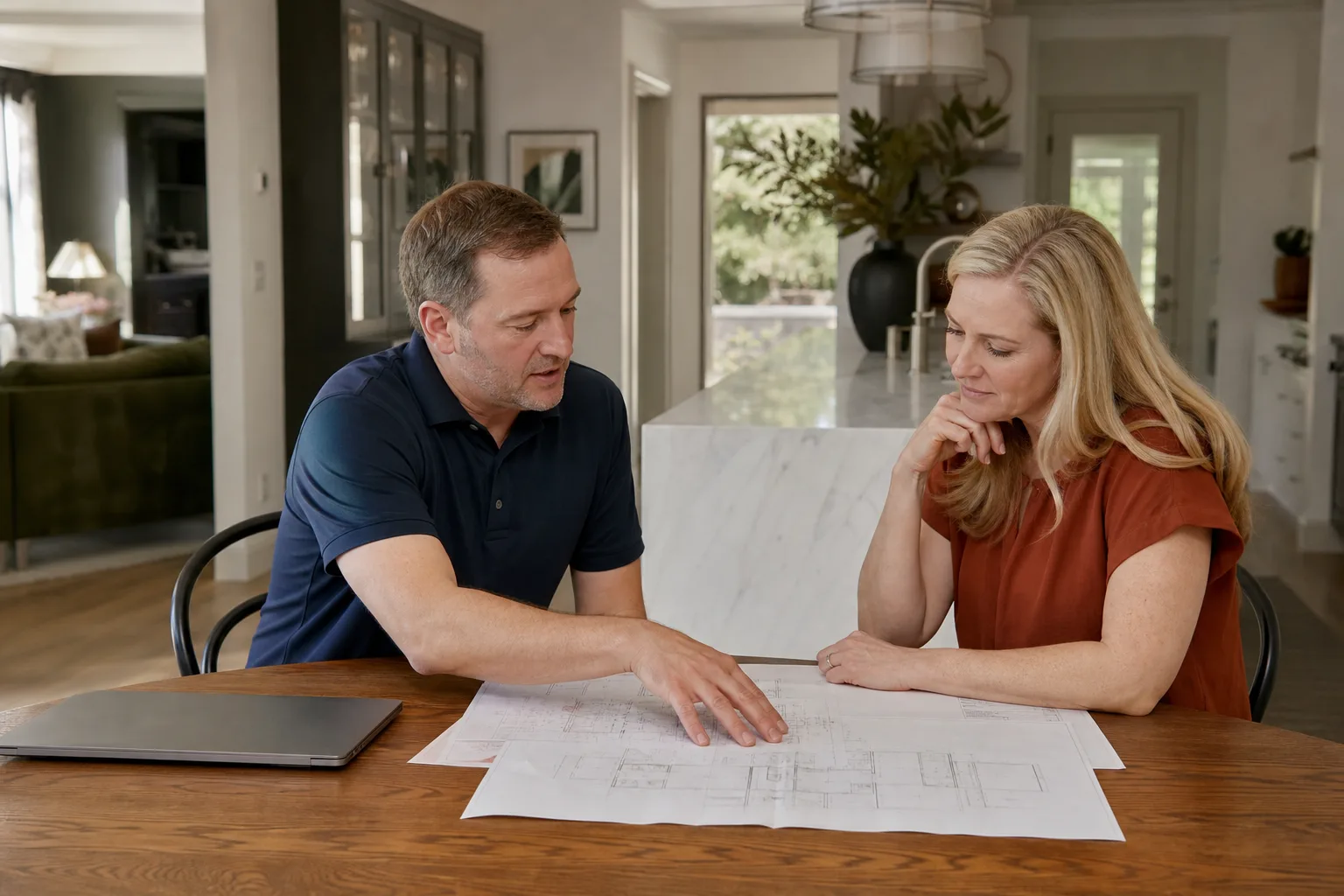
- Plan set preparation. If your drawings are close to ready, we bring them to the City’s current submittal standard. If they aren’t, we work with our drafting partners to prepare a complete set: site plan, floor plan, elevations, structural details, Title 24 compliance, and the energy calculations the state requires. Every set gets a written review checklist before anything is filed.
- City of Thousand Oaks submittal. We file your application with the Community Development Department, pay the plan check fees from your project account, and provide you with the City’s case number the same day. You’ll know your file number and who is reviewing it.
- Plan check monitoring and corrections. This is where most applications stall. We check your file status every week, not every month. When the City returns corrections (and they almost always do), we turn them around fast because every day your permit sits in the correction queue is a day your family isn’t in the new space. Typical Thousand Oaks correction rounds include two to three passes, depending on your lot.
- Permit issuance and job card. The City issues your permit, we confirm all conditions of approval are captured, and the approved plan set goes into your project binder. We make sure the job card is posted at the property, because Thousand Oaks inspectors will not pass a site without one.
- Construction support. Once the permit is issued, we hand everything off to our build team or to your chosen contractor. Either way, you keep the complete permit history in one place, and we’re available to answer inspector questions during construction. Your permit stays open and compliant until final sign-off.
Permit Application Pricing in Thousand Oaks
Permit application pricing in Thousand Oaks breaks into two parts: the City’s fees and our work to get the application through. Here’s what families should plan for.
| Item | Typical Cost in Thousand Oaks |
|---|---|
| City plan check fee (detached ADU under 800 sq ft) | $3,500 – $6,500 |
| City plan check fee (garage conversion) | $2,500 – $4,500 |
| School district fees (Conejo Valley USD) | $1,200 – $4,200 depending on square footage |
| Fire sprinkler plan review (when required) | $400 – $900 |
| Coastal development review (if your lot triggers it) | $1,500 – $3,000 |
| Seedling permit application management | $3,000 – $8,000 depending on plan condition and complexity |
What moves the number? A hillside lot with a retaining wall question will cost more than a flat lot in the Thousand Oaks tract neighborhoods. A detached ADU with two bedrooms and a full bath requires more drawings and more review than a simple studio conversion. If your property is in the coastal zone overlay, which extends further inland than most homeowners realize and reaches into parts of Newbury Park, you’ll see an additional review line because the California Coastal Commission’s authority is delegated to the City for certain permits.
Every Seedling family receives a written price for our permit application work before we open a single file. That price is the price. If the City adds fees during review (school district fees are the usual surprise), we tell you what’s coming and why before you have to pay it. Our 365-Day Done Right Promise applies to the permit package too: if the City finds an error we made, we fix it on our time, not yours.
Clark and Julia in the Lynn Ranch neighborhood asked us to manage their detached ADU permit last spring. Their lot is 9,200 square feet with two mature oaks, and the City’s first correction letter asked for a specific arborist report and a revised site plan showing root protection zones. We coordinated the arborist, revised the plan, and resubmitted in nine days. Their permit issued on the second pass. That’s normal for us, not exceptional.
Permit Application in Specific Thousand Oaks Neighborhoods
Thousand Oaks is not one flat market for permits. Different areas trigger different requirements, and we file accordingly.
Newbury Park
Newbury Park addresses carry a Thousand Oaks mailing label but permit through the same Community Development counter. Lots here skew larger and older, with more hillside grading history. The City requires a soils report for detached ADUs on any lot with documented fill, and several 1960s-era Newbury Park tracts have exactly that. Budget an extra $1,500 – $2,500 for geotechnical work if your lot is in those areas.
Westlake Village (Thousand Oaks portion)
Parts of Westlake sit inside the Thousand Oaks city limits, and the HOA layer here is the strictest in the Conejo Valley. Architectural committee approval typically takes 30 – 45 days before the City will even accept your application. We prepare the HOA package while the plan set is drafted so the two review clocks run at the same time.
Wildwood and Lynn Ranch
These neighborhoods have the highest concentration of protected oak trees and the most fire zone overlay requirements in the City. Class A or B roof coverings, ember-resistant vents, and defensible space demonstrations are common conditions of approval. We account for those before submittal rather than discovering them in a correction letter.
Conejo Oaks and Hillcrest Estates
Larger custom homes on these lots mean the City’s lot coverage calculations get scrutinized more carefully. An ADU that exceeds the allowed lot coverage by a few decimal points will get bounced, and fixing it after submittal means a revised site plan. We calculate setback and coverage compliance during document review, not after the first rejection.
How Thousand Oaks Permit Requirements Differ from Other Cities
If you’ve built in another city, expect Thousand Oaks to be more thorough. Here’s what’s specific here.
- Coastal zone review. Thousand Oaks sits within the appealable coastal zone. A portion of the City’s development standards must be consistent with Local Coastal Program policies, which means some ADUs require an extra review even if the ocean is 20 miles away. We know which addresses trigger it and which don’t.
- Hillside and view preservation rules. The City has a strong view protection ordinance, particularly along the ridgelines near the Santa Monica Mountains. If your ADU design could obscure a neighbor’s documented view, the design will be adjusted by the planning division. We account for this in plan selection before the City has to tell us.
- Oak tree ordinance. The City protects mature oaks and requires a permit for any construction within the root zone of a protected tree. On some lots, an ADU’s most practical location is within that zone, and the tree protection plan becomes part of the permit set. We’ve managed oak-adjacent ADUs in Wildwood and know the City’s current arborist checklist.
- Fire zone requirements. The Thousand Oaks hills are designated Very High Fire Hazard Severity Zone territory. Depending on your specific parcel, the ADU may need to meet WUI (Wildland-Urban Interface) building code chapters, which affect everything from roof materials to exterior wall finishes. These details must be in the plan set at submittal, not negotiated after the fact.
What Goes Into a Complete Permit Application in Thousand Oaks
A complete submittal is what gets you into the City’s queue. An incomplete one gets you a rejection letter and a new submittal date. Here’s what the City of Thousand Oaks is looking for on your first pass.
- Site plan at no smaller than 1/8-inch scale showing property lines, existing structures, proposed ADU location, setbacks to all lot lines, driveway and access points, and all utility connection points.
- Architectural plans with floor layout, all four elevations, door and window schedule, roof details, and the foundation system. For prefab units from companies like Abodu or Cover, the manufacturer’s plans are included, but the site adaptation sheet is what the City reviews most carefully.
- Structural calculations signed by a California-licensed engineer. For detached ADUs, this includes lateral load framing, roof framing, and the foundation design for your specific soil type.
- Title 24 energy compliance documentation, either HERS verification or performance documents, generated by a California energy analyst.
- School district form signed by Conejo Valley Unified School District (or the applicable district), with the developer fee payment completed.
- HOA sign-off if your property has a homeowners association, on the HOA’s letterhead and signed by the architectural committee chair.
- Septic or sewer clearance if your ADU connects to an existing septic system, with the Ventura County sign-off attached.
- Arborist report when any protected oak sits within your construction envelope.
Missing one of these items delays everything. We check every line on this list before we walk your application to the counter, because the City’s current submittal standards require all documents uploaded digitally in the correct format, not just brought in on paper.
Prefab ADU Permitting in Thousand Oaks
Prefab and modular ADUs are changing how Thousand Oaks homeowners add space, because factory-built units can reduce construction time and produce less waste on site. But they don’t bypass the City’s permit process.
We’ve filed permits for units from Abodu, Cover, and Tuff Shed conversions, and the pattern is consistent: the factory drawings are excellent, but the City wants site-specific engineering that the manufacturer doesn’t provide. Your foundation, your soil, your setbacks, and your fire zone details all need to be drawn by a local engineer and stamped for Ventura County. That’s the part we manage.
If you’re considering a prefab ADU, don’t wait until the unit is ordered to start the permit. The City will need two to five months of review time depending on complexity, and the unit’s delivery date should be scheduled around the permit issuance, not the other way around. We can also advise on materials selections: James Hardie siding products are a common choice on Thousand Oaks ADUs because they meet fire-zone requirements and stand up to the Conejo Valley’s summer heat without fading the way cheaper composites do.
How Much Does a Permit Application Cost in Thousand Oaks? (Key Takeaways)
- City fees for a typical ADU permit run $3,500 – $6,500 for plan check alone, with school fees adding another $1,200 – $4,200.
- Our permit application management costs $3,000 – $8,000, depending on the condition of your existing plans and your lot’s complexity.
- The full permit, from first submittal to issuance, typically takes 3 – 5 months through the City of Thousand Oaks, though simpler garage conversions can clear faster.
- Written pricing is our standard. You’ll know our fee before we start working, and any additional City fees are explained before you pay them.
- The 365-Day Done Right Promise covers the permit work. If we made the error, we fix it and resubmit on our time.
FAQs – Permit Application
How long does a permit application take in Thousand Oaks?
Expect 3 to 5 months from first submittal to permit issuance for a typical ADU in Thousand Oaks. Simple garage conversions can clear in 2 to 3 months. Hillside lots, coastal zone reviews, and HOA approvals add time. We track your file weekly and turn corrections around quickly, but the City’s queue is the City’s queue, and we can’t control their staffing levels. Call us at (805) 309-3462 and we’ll give you a straight timeline based on your address and project type.
Can I file a permit application myself?
Yes, the City of Thousand Oaks accepts owner-builder permit applications, but you’ll be held to the same submittal standards as a professional. Most homeowners who file on their own get a correction letter on the first pass because one detail in the plan set doesn’t meet current code. We step in at any point: before you file, to make sure the first pass is clean, or after you’ve received corrections, to resolve them. Either way, the first consultation is free.
What’s the difference between a permit application and a building permit?
A permit application is the submittal: your plans, calculations, fees, and forms that go before the City for review. A building permit is the issued document that allows construction to start. In Thousand Oaks, the application stage includes plan check, which is the City’s technical review of your drawings. The permit itself is issued after all plan check corrections are resolved. We handle the entire application stage, and we’re with you at the counter when the permit is issued.
Is it cheaper to file for a garage conversion permit than a new detached ADU?
Generally yes, because a garage conversion uses an existing structure, which means fewer structural calculations, no new foundation, and often no planning review so long as the exterior remains largely unchanged. City plan check fees for garage conversions in Thousand Oaks typically run $2,500 – $4,500 compared to $3,500 – $6,500 for a detached ADU. Your specific costs depend on whether you’re adding plumbing, upgrading the garage’s electrical panel, or changing the roofline. Call (805) 309-3462 with your address and we’ll tell you which category your project falls into and what the City will likely charge.
What if the City rejects my first permit application?
The City of Thousand Oaks rarely issues a flat-out rejection. What you’ll receive is a correction letter: a list of items the plan reviewer wants fixed before the application can move forward. We receive those letters the same day they’re posted (your file is monitored weekly if not more often), and we work through each comment in order. Most applications pass on the second submittal once the corrections are made correctly. If the rejection stems from something we prepared incorrectly, our 365-Day Done Right Promise means the fix doesn’t cost you another dollar.
Call Seedling ADU Thousand Oaks to Start Your Permit Application
If you’re ready to add a new home to your lot in Thousand Oaks, the permit application is the first real step. It’s also the step where mistakes get expensive and delays get baked in. Ben Ortega and the Seedling ADU Thousand Oaks team have filed ADU, garage conversion, and addition permits across the Conejo Valley, and we know exactly what the City of Thousand Oaks wants to see on the first submittal.
Every project starts with a written price before any work begins. You’ll know our fee, the City’s estimated fees, and the likely timeline before you commit to anything. Call us at (805) 309-3462 for a free permit consultation, and we’ll tell you what your property needs and what it will cost. A live person answers, every time, at any hour.
Written by Ben Ortega, Owner at Seedling ADU Thousand Oaks, serving Thousand Oaks.